Kiln-formed glass · Nelson, New Zealand

Cut by hand.Fired up to five times.Never made twice.

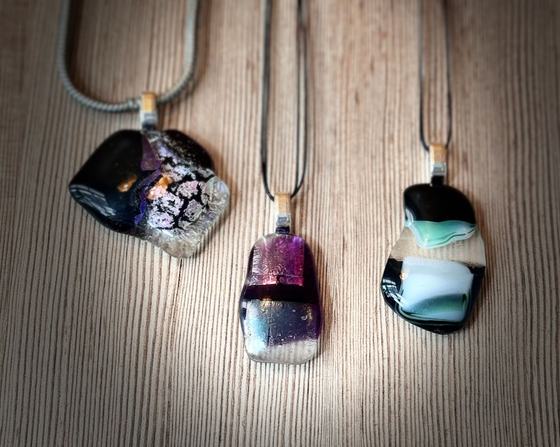
Glass Adventures is my fused glass studio in Nelson. Every piece starts as imported fusing glass, cut and ground by hand, then goes through the kiln as many as five times, each firing taking up to 24 hours. This is the story of how they're made, and why no two ever come out the same.

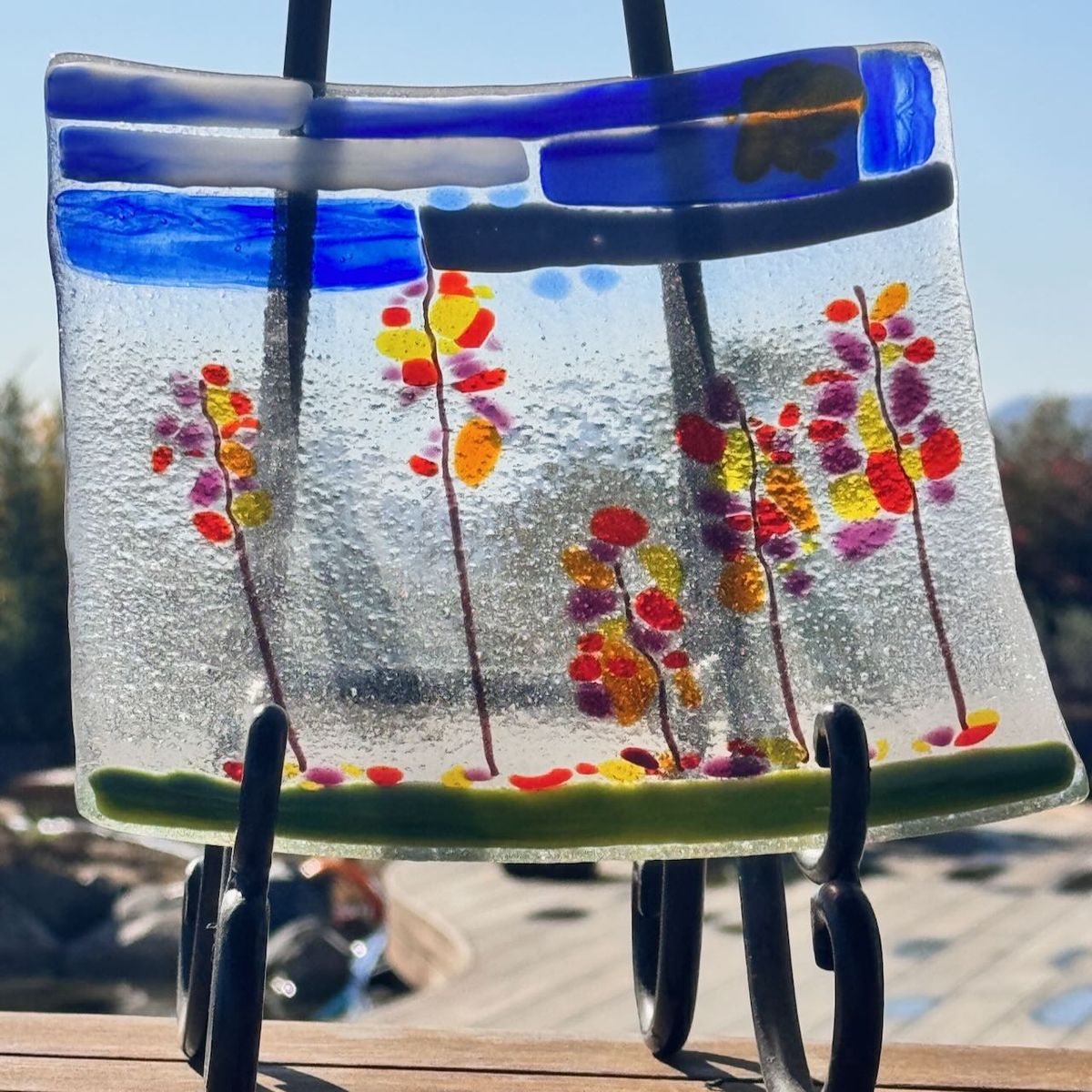
A slumped fused glass dish with autumn trees in red, orange and violet under a blue sky, standing on an easel in sunlight
The autumn trees dish, finished and in the sun.
The story of a piece

A candle holder, from the bench to the light

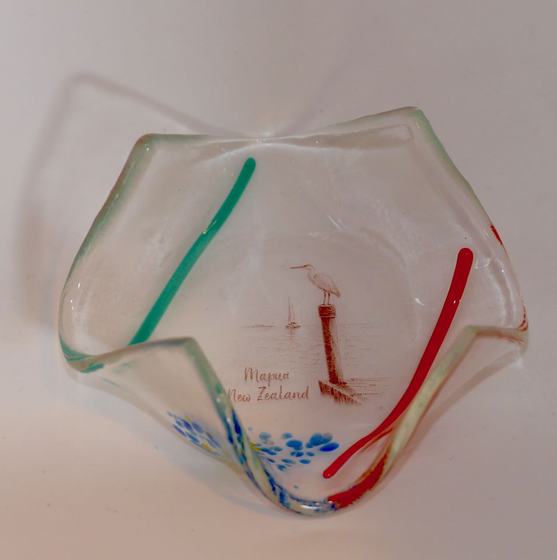
Here's the journey of the Mapua heron candle holder: hand work at the bench, then three firings of up to 24 hours each. Photographed in my studio.

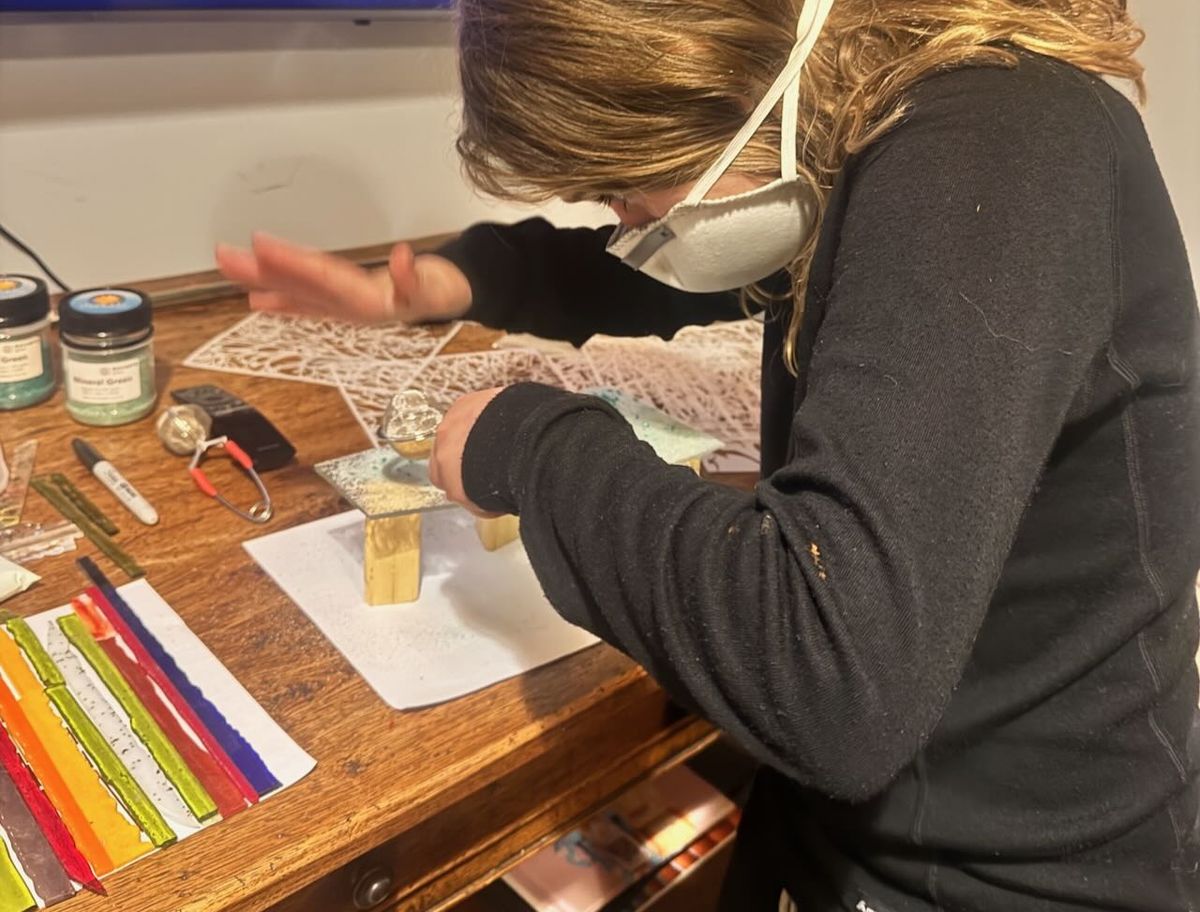
  1. Working at the studio bench wearing a dust mask, with jars of frit, a stencil and strips of coloured glass
    At the bench. Frit and glass dust mean a mask goes on.
    Stage 01 · Before any firing

    Cut, grind and build

    Every piece starts long before the kiln. I design it, then score and snap each piece of glass by hand. Edges are ground smooth so they fit together and fuse cleanly.

    Then the piece is built layer by layer on its base glass: sheet glass, stringer, frit and millefiori, placed one at a time.

    Firing 1Firing 2Firing 3
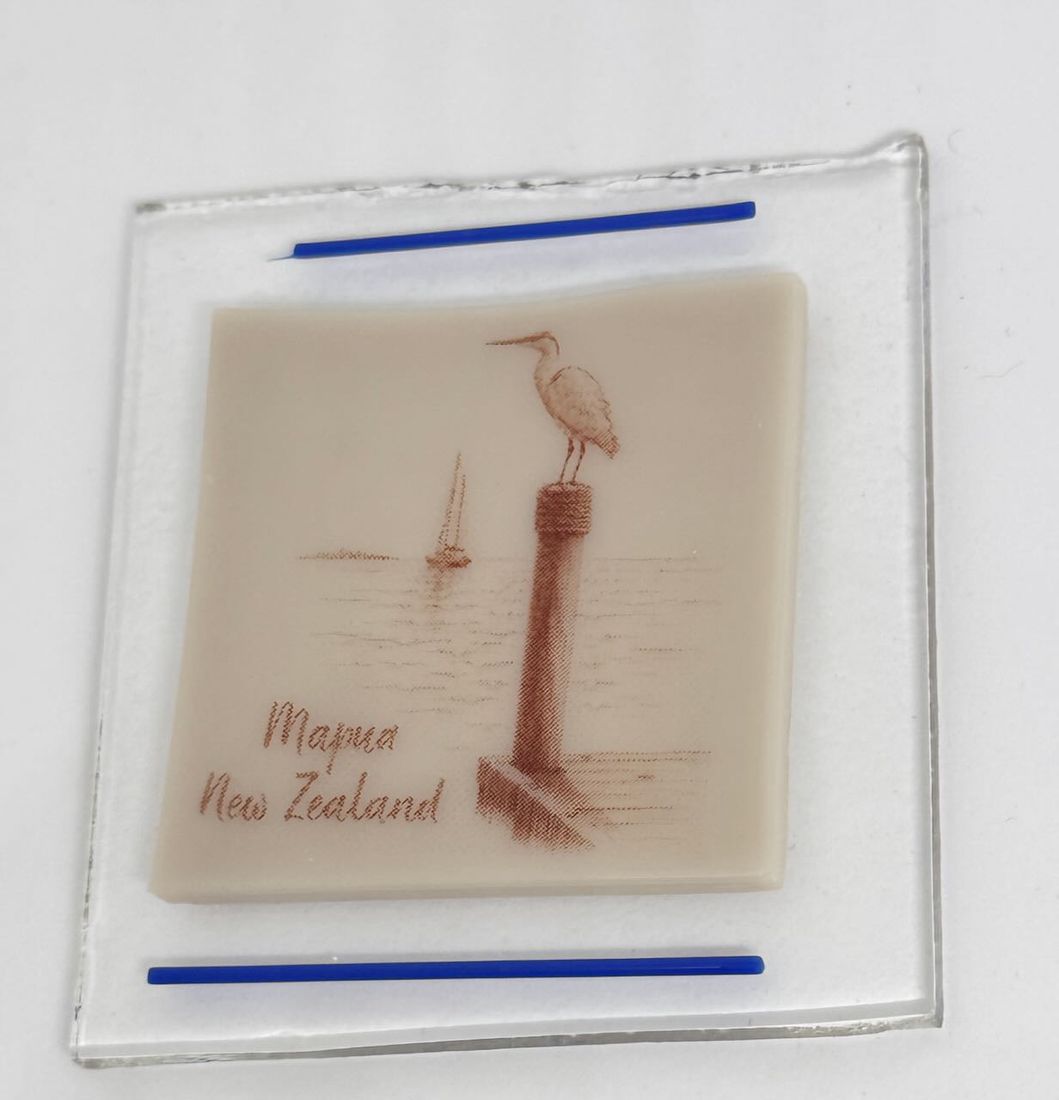
  2. A Mapua heron image on a fused base, set on clear glass with two blue stringers laid ready for the next firing
    The Mapua heron image on its base, ready for the next layer.
    Stage 02 · Firing 1

    Fuse the image to the glass

    The first firing fuses the image onto the base glass so they become one piece. The kiln climbs slowly to fusing heat, holds, then cools slowly. One firing can take up to 24 hours.

    When it comes out, I check the piece and plan the next layer: where the lines go and where the colour should gather.

    Firing 1Firing 2Firing 3
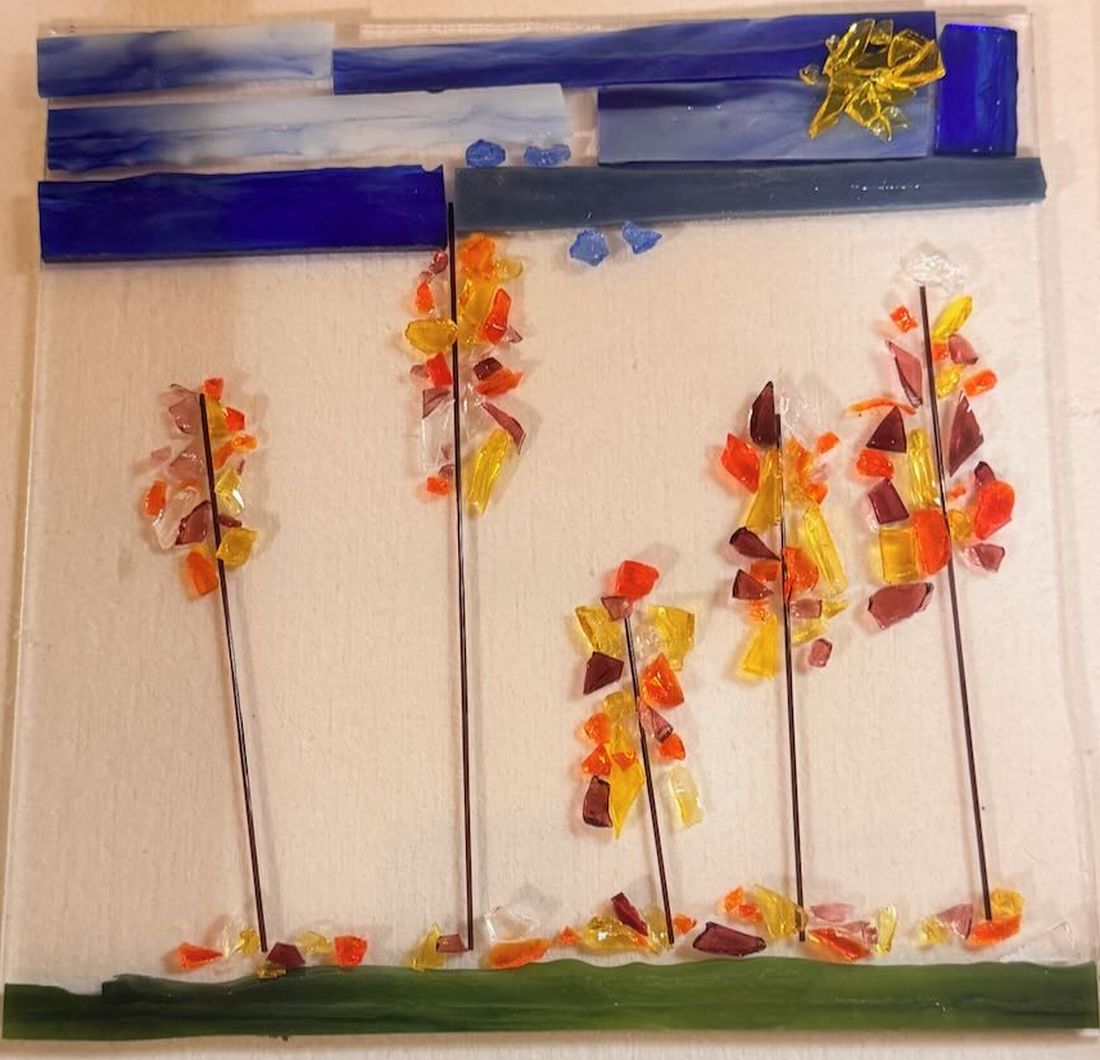
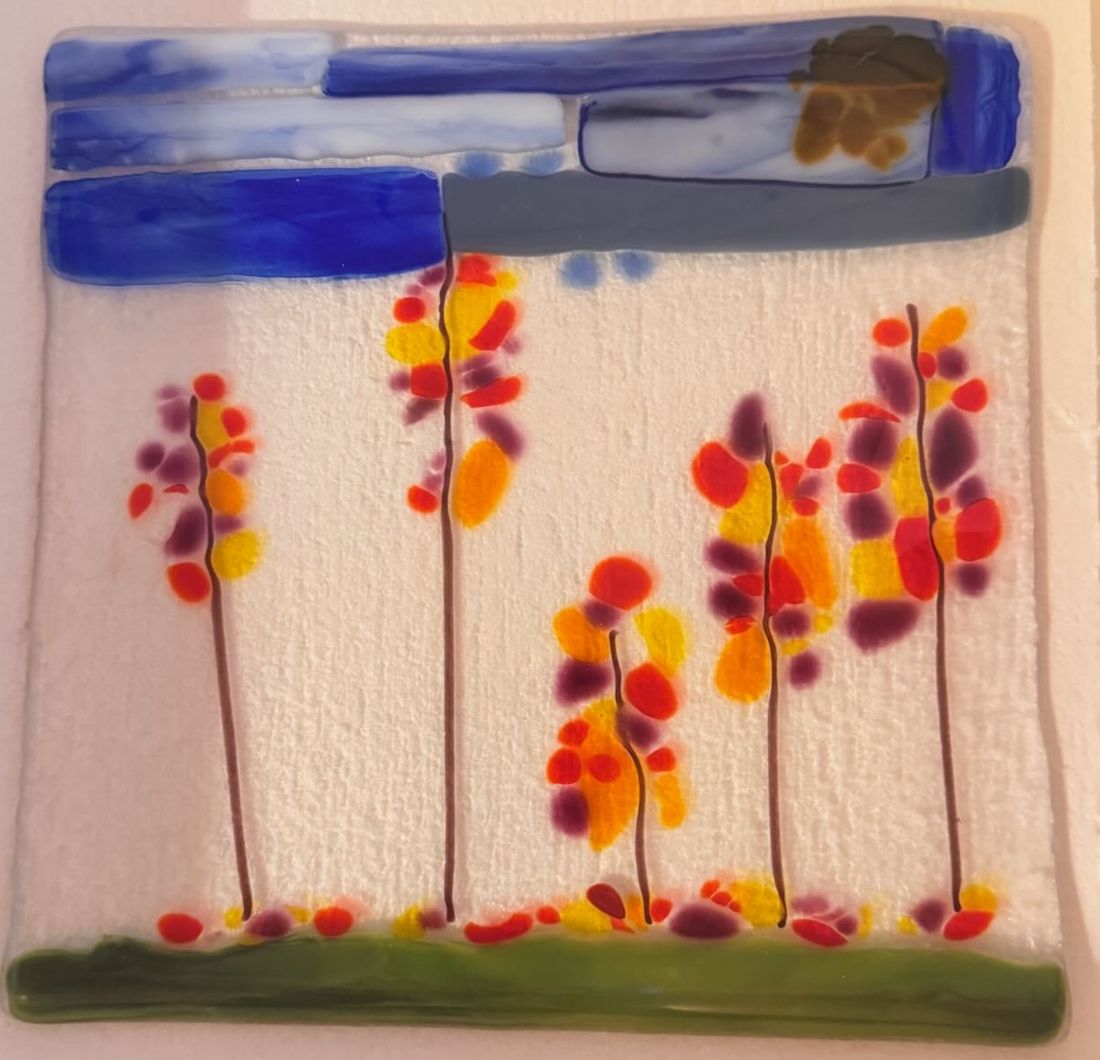
  3. Sharp, angular chips of red, amber and violet glass and thin stringer trunks laid on the panel before firing The same panel after firing, with the chips melted into rounded dots of colour and the trunks fused into fine lines
    Stage 03 · Firing 2

    Add stringer and frit, then fire again

    Next come the details: fine stringer for lines and frit for colour and speckles. Then the piece goes back into the kiln for a second full firing to around 800 °C.

    You can see what the heat does on this autumn trees panel. Sharp chips go in and soft, rounded dots of colour come out. I can plan where each piece goes, but the kiln decides its final shape.

    Firing 1Firing 2Firing 3
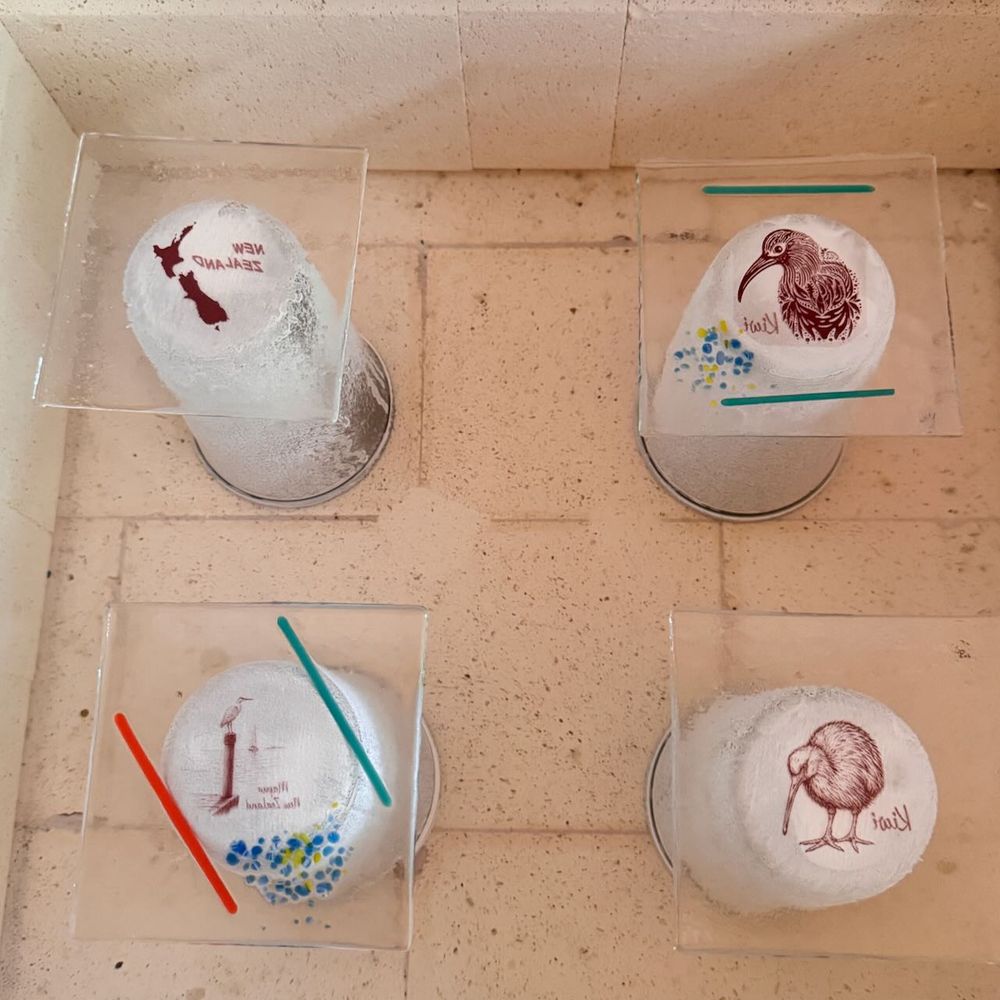
  4. Four flat fused squares with kiwi, heron and map images resting on top of round moulds inside the kilnBefore
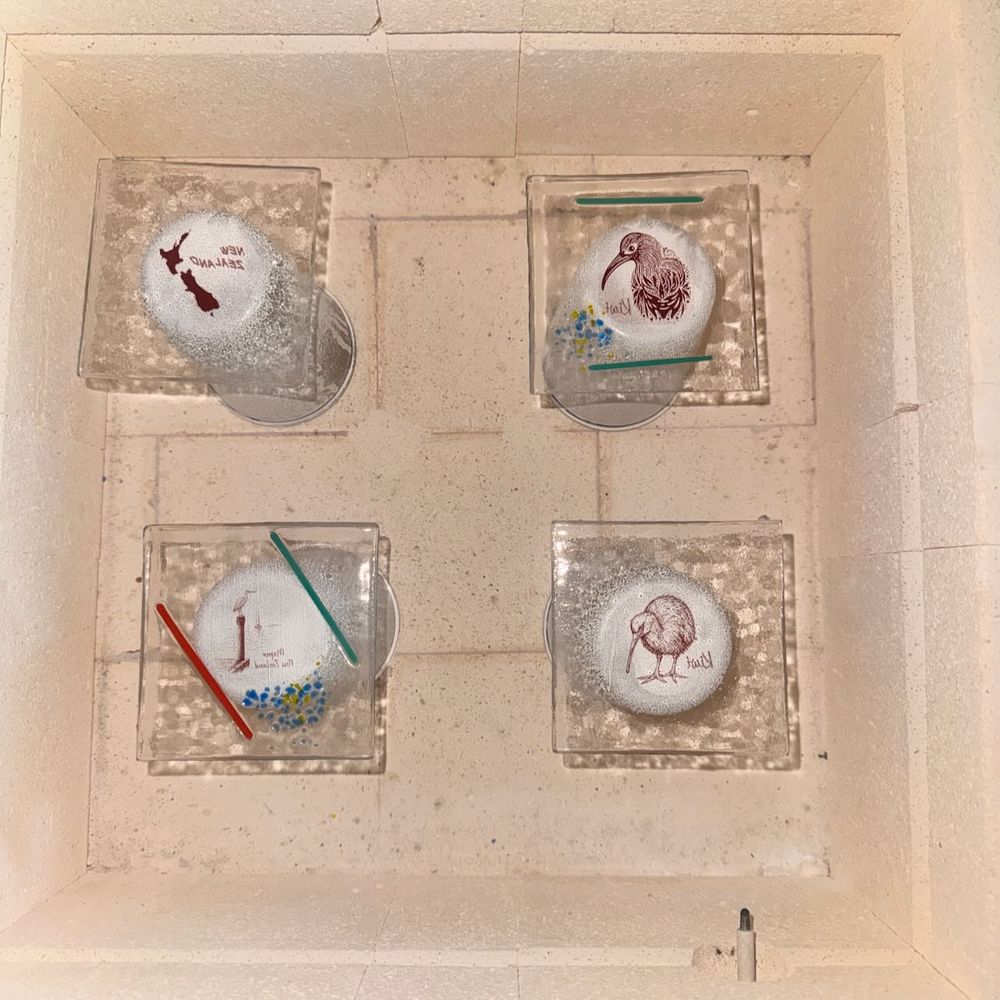
    The same four squares after firing, now draped down over the round mouldsAfter
    Flat squares on their moulds, then draped after the third firing.
    Stage 04 · Firing 3

    Drape it into shape

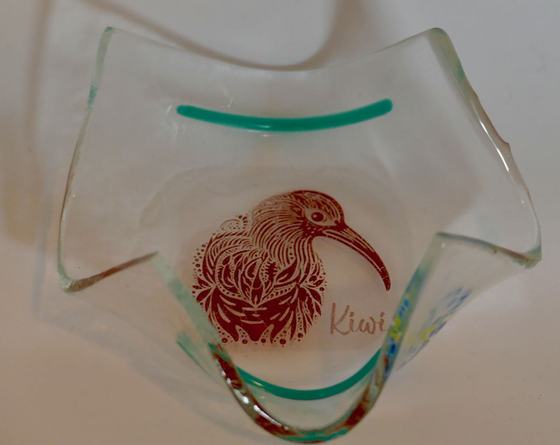
    After two firings the piece is still flat. For a candle holder, it goes back into the kiln a third time, balanced on top of a round mould. This firing is cooler and slower. The glass softens just enough to fold down over the mould, and every fold falls a little differently.

    Trinket dishes go through the same third firing, slumped down into a mould instead.

    Firing 1Firing 2Firing 3
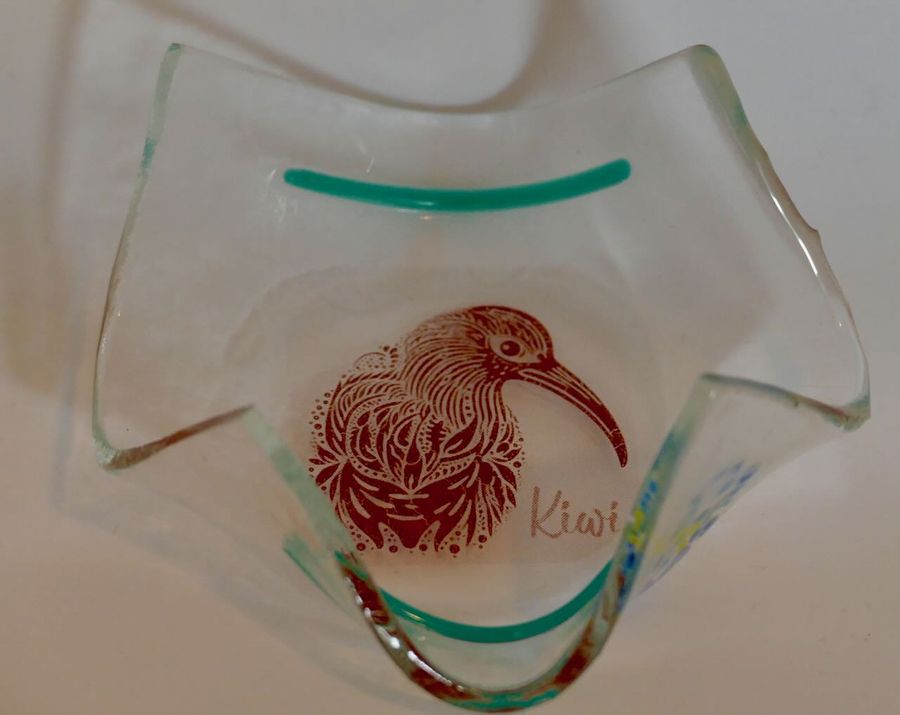
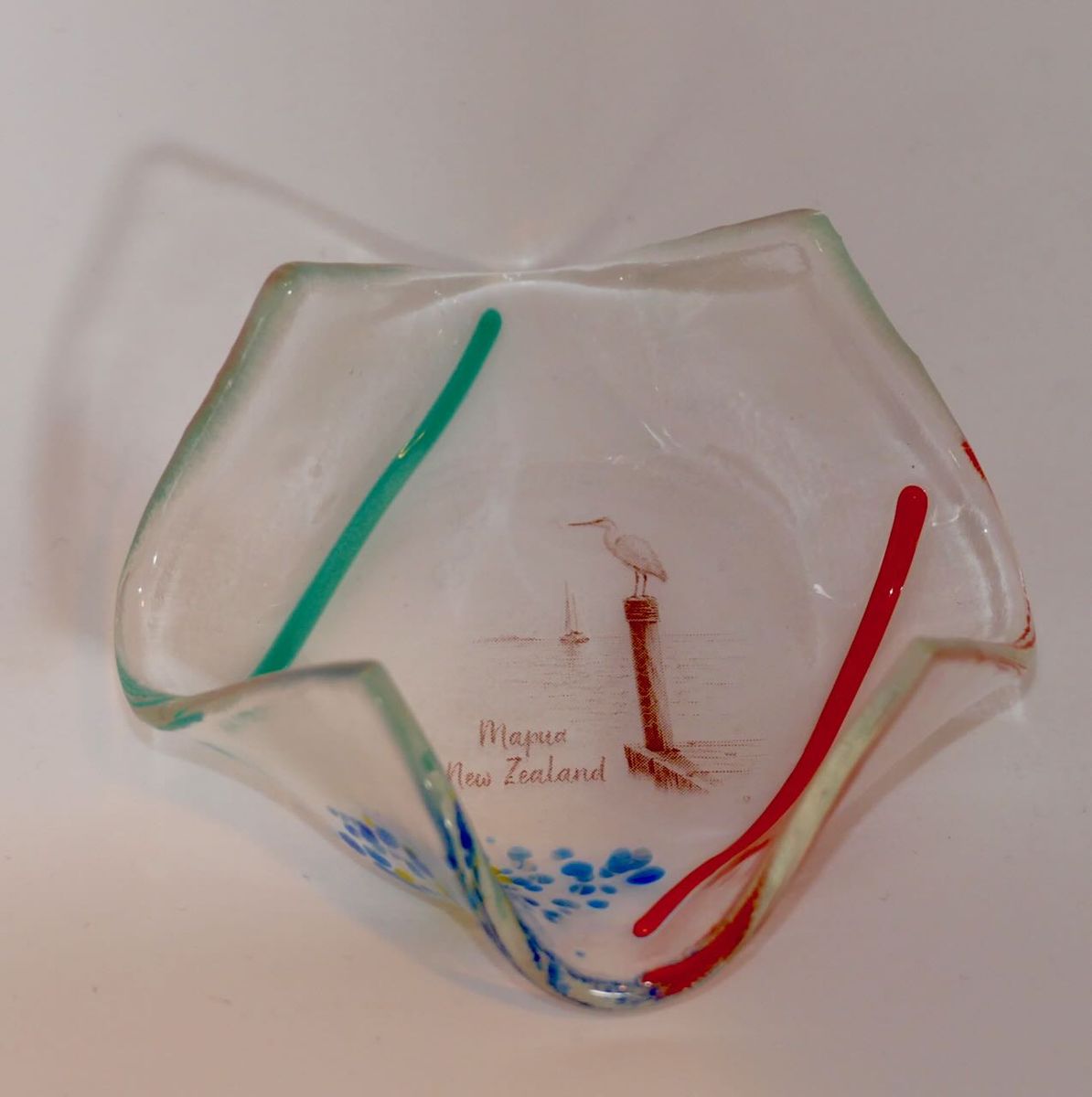
  5. The finished Mapua heron candle holder: clear glass with wavy draped sides, red and teal stringer and blue frit
    The finished Mapua heron candle holder.
    Stage 05 · Into the light

    Then it meets the light

    Kiln-formed glass only comes alive when light goes through it. Put a tealight inside and the clear glass glows, the stringer lines light up and the heron floats in the middle.

    That's the moment I make every piece for, and it changes with every room and every time of day.

    Cut · ground · built · three firings of up to 24 hours · one piece

Sculptural glass · 4–5 firings

Creating the curve

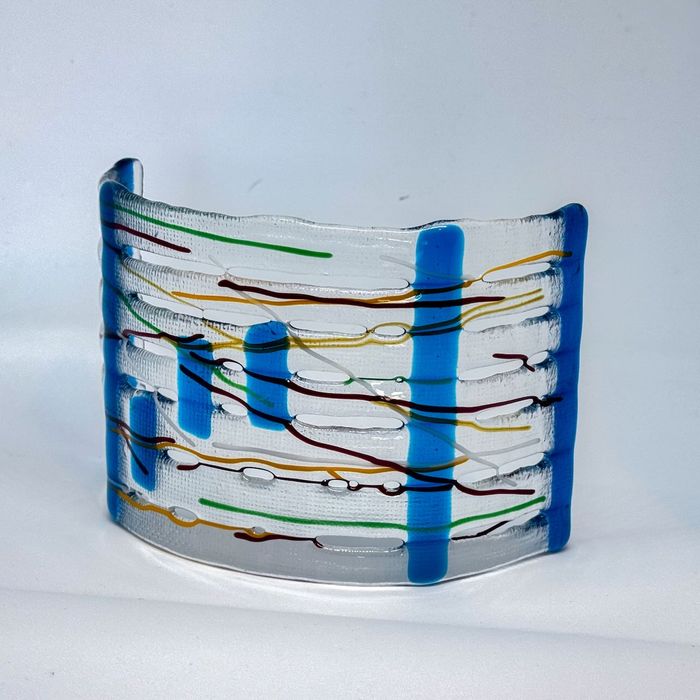
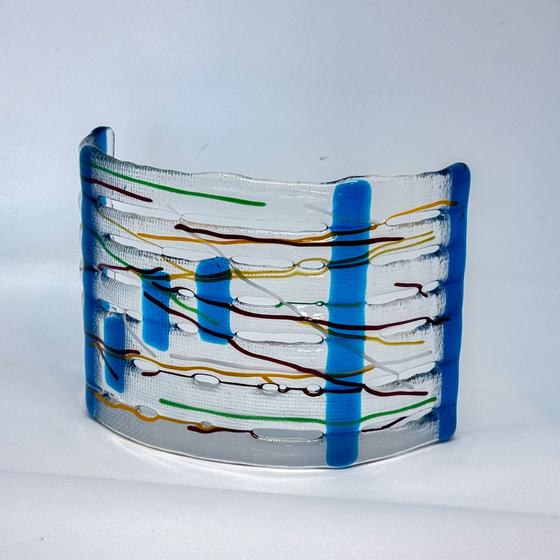
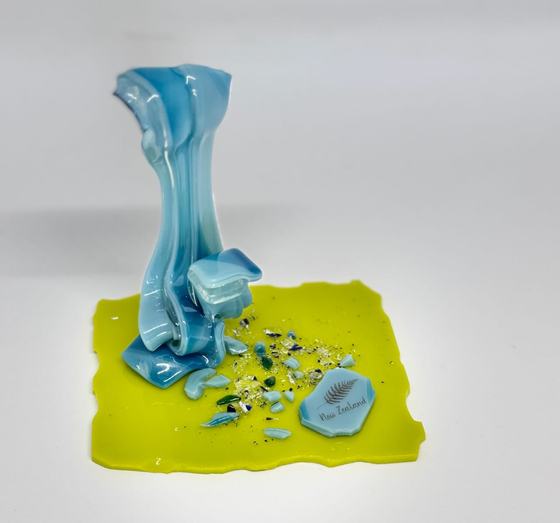
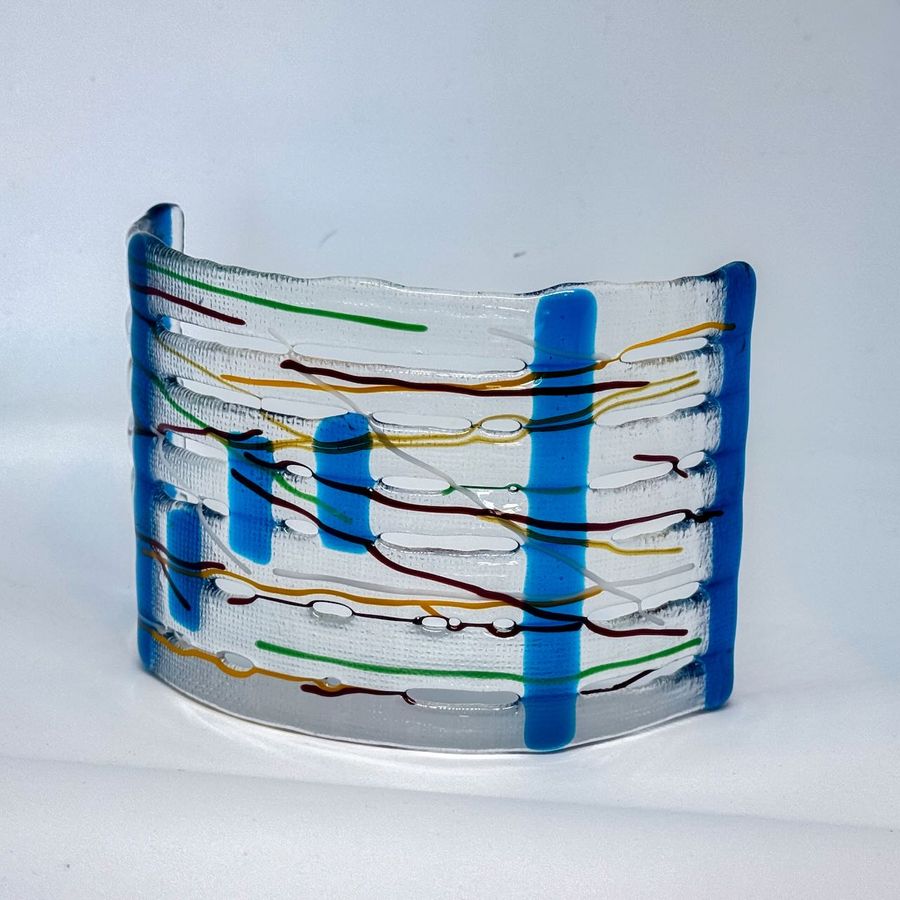
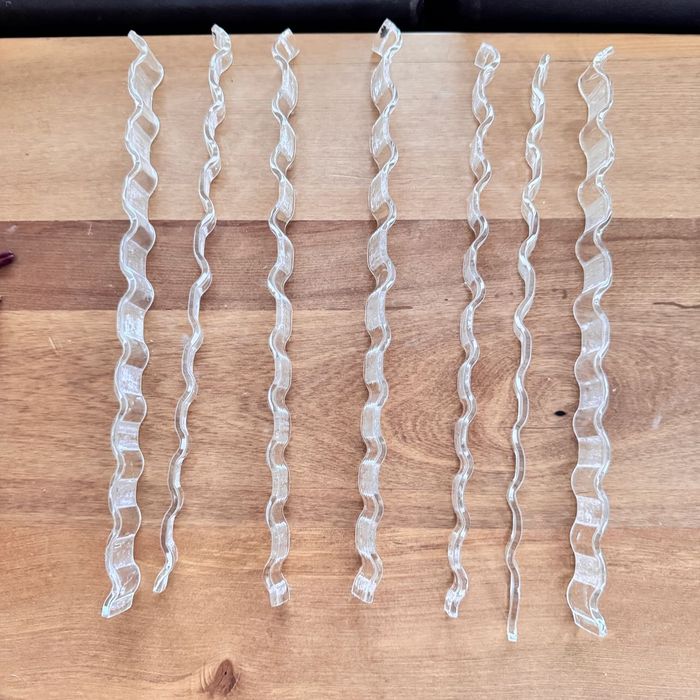
Sculptural pieces go back into the kiln again and again. This curve started as flat strips of clear glass and took four to five firings, each up to 24 hours, before it could stand on its own.

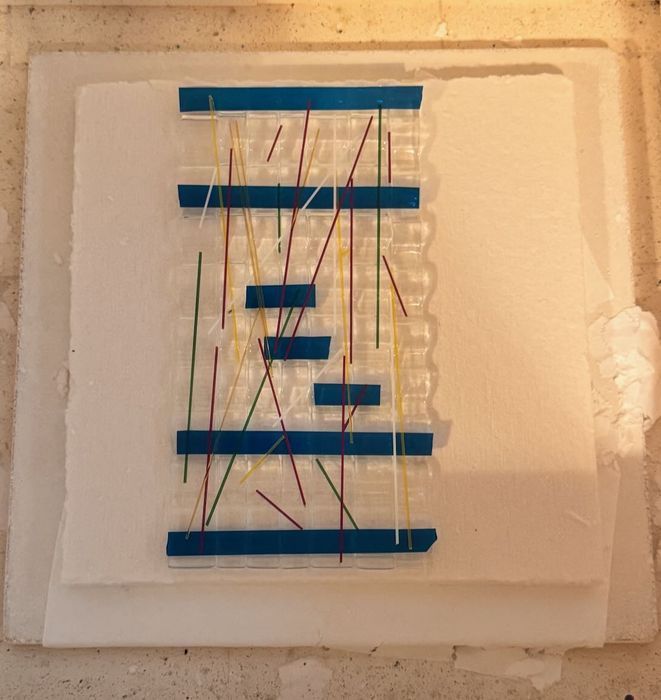
  1. Strips of clear glass fired into wavy ribbons, laid out on a wooden tableShape the stripsClear glass is fired into wavy ribbons.
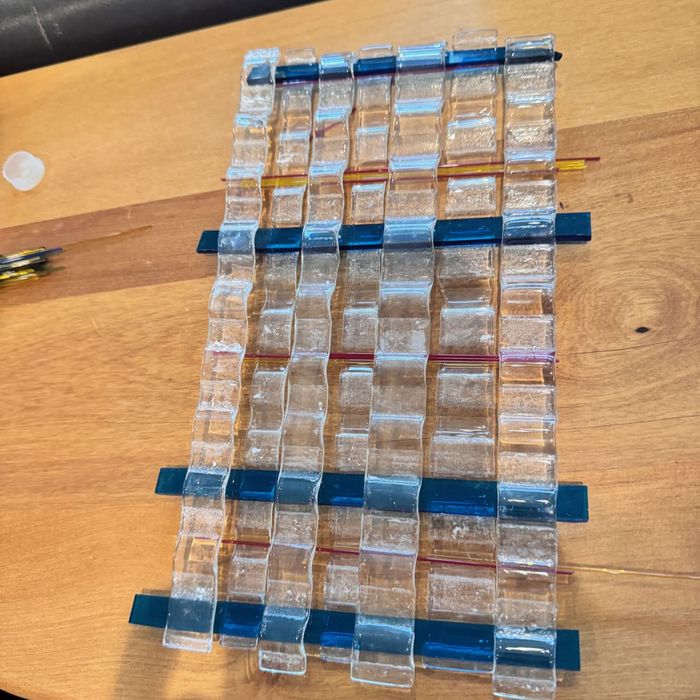
  2. The wavy clear strips woven together with blue glass bands and fine stringerWeaveBlue bands and stringer are woven through by hand.
  3. The woven piece laid out on the kiln shelf with blue bands and coloured stringerInto the kilnThe weave is laid on the shelf, ready to fuse.
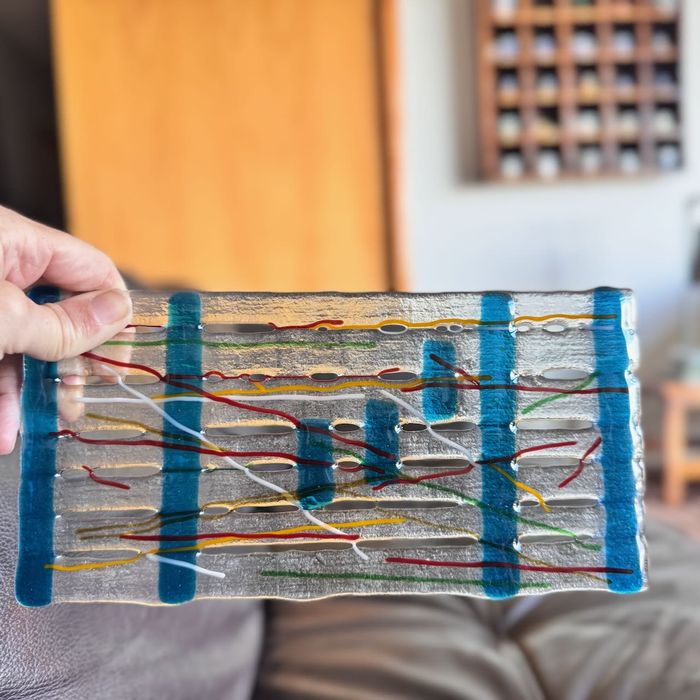
  4. The fused woven panel held up, now one solid piece with flowing stringer linesFused as oneSeparate strips become a single panel.
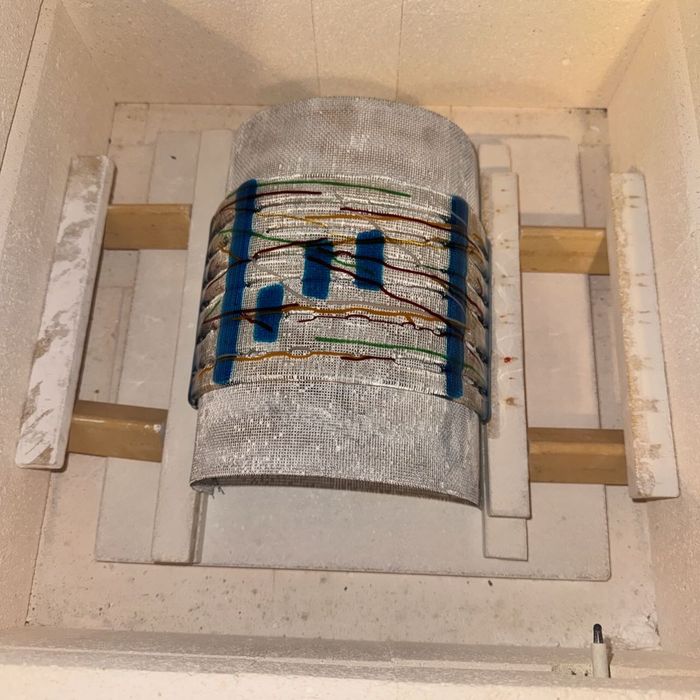
  5. The fused panel draped over a curved mesh-covered mould inside the kilnDrapeA final firing over a curved mould.
  6. The finished curve standing on its own, woven clear glass with blue bands and coloured linesThe curveFinished, and standing on its own.
Inside the kiln

Most of the work happens where no one can see it

Once the kiln lid closes, the glass follows a firing schedule: a set of temperatures and times that heats it, fuses it and then cools it slowly enough to stay strong. A single firing can take up to 24 hours, and a sculptural piece goes through it up to five times.

A typical full fuse firing curve Temperature rises slowly to about 680 °C and holds, rises quickly to about 800 °C to fuse, drops quickly to about 480 °C and holds to anneal, then cools slowly over many hours back to room temperature. 0 °C 200 400 600 800 0 h 4 h 8 h 12 h 16 h 1 2 3 4 5
  1. Slow heatGlass cracks if it heats unevenly, so the first climb is gentle.
  2. Bubble squeeze · ~680 °CA hold while the glass softens lets trapped air escape from between the layers.
  3. Full fuse · ~800 °CThe layers melt together into one piece with a glossy, rounded surface.
  4. Anneal · ~480 °CA long hold lets the whole piece settle to one temperature, removing hidden stress.
  5. Slow coolThe kiln stays shut for hours more. Opening it early can crack the work.

A typical full fuse schedule for 6 mm glass. Thicker and sculptural pieces need slower schedules, so a single firing can take up to 24 hours. Draping and slumping firings run cooler.

Why the glass has to match

All glass expands as it heats and shrinks as it cools. The rate is called its COE, or coefficient of expansion. Fuse two glasses with different COEs and they pull against each other as they cool. The piece can crack, sometimes days later.

That's why I can't use any old glass. I only use specialist fusing glass that's made and tested to be compatible, and nearly all of it is imported. It's invisible in the finished piece, and it's the reason the piece lasts.

A small stack of cut glass layers seen from the side on the kiln shelf before firing
Before: separate layers
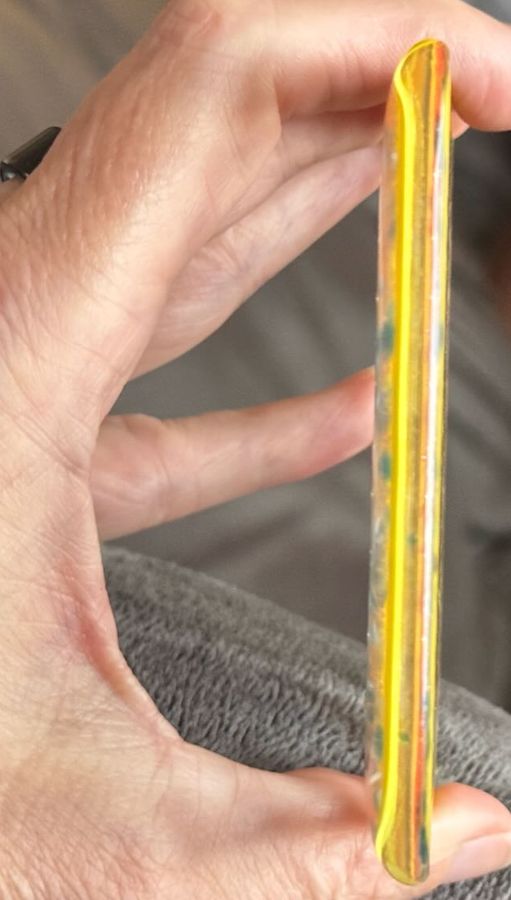
The edge of a fused glass piece held between finger and thumb, showing one solid, rounded edge about 6 mm thick
After: one solid edge

At full fuse, glass naturally pulls toward about 6 mm thick. Stack it thinner and it draws in. Stack it thicker and it spreads. Every layer I add changes the final shape.

Materials

Glass that travels a long way to get here

Fusing glass isn't window glass. It's specialist glass made to be compatible in the kiln, and very little of it is made in New Zealand. My sheet glass and frit come from makers like Bullseye Glass in the USA, and my millefiori comes from Italy.

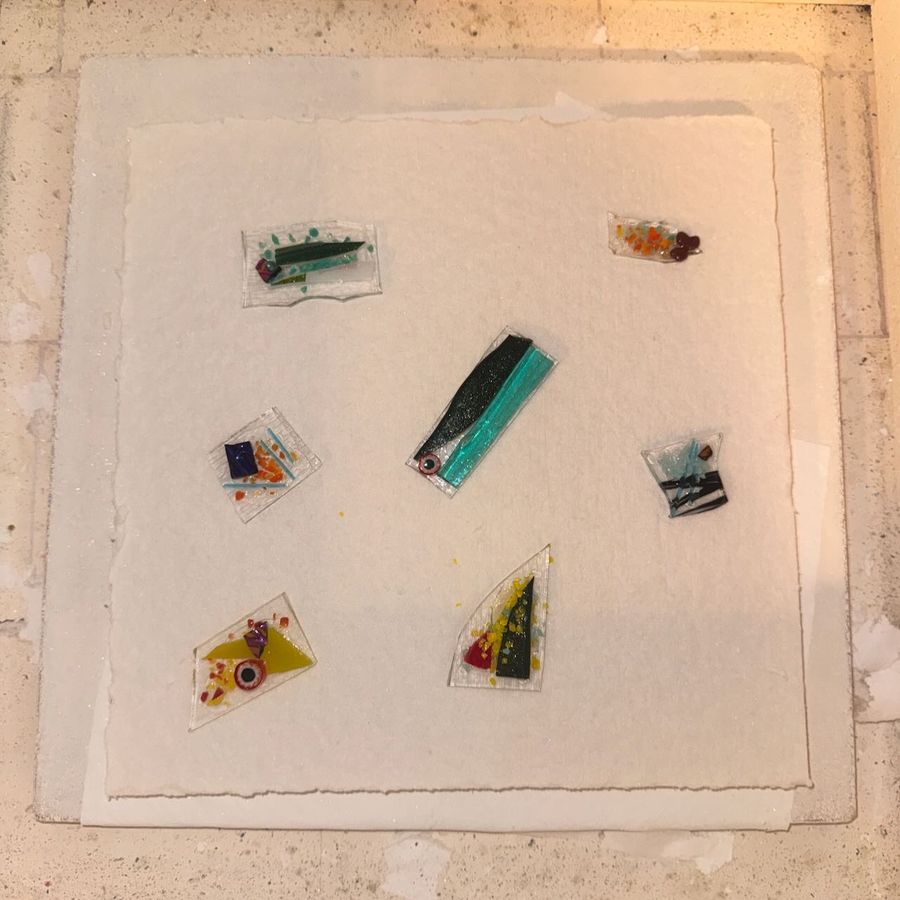
Small pendants built from cut pieces of coloured fusing glass laid out on kiln shelf paper
Fusing glass

The foundation

Sheet glass in clear and colours, made and tested to a single COE so every layer cools at the same rate. It's what lets me stack, fuse and fire again without the piece cracking apart.

Imported · Bullseye Glass, USA
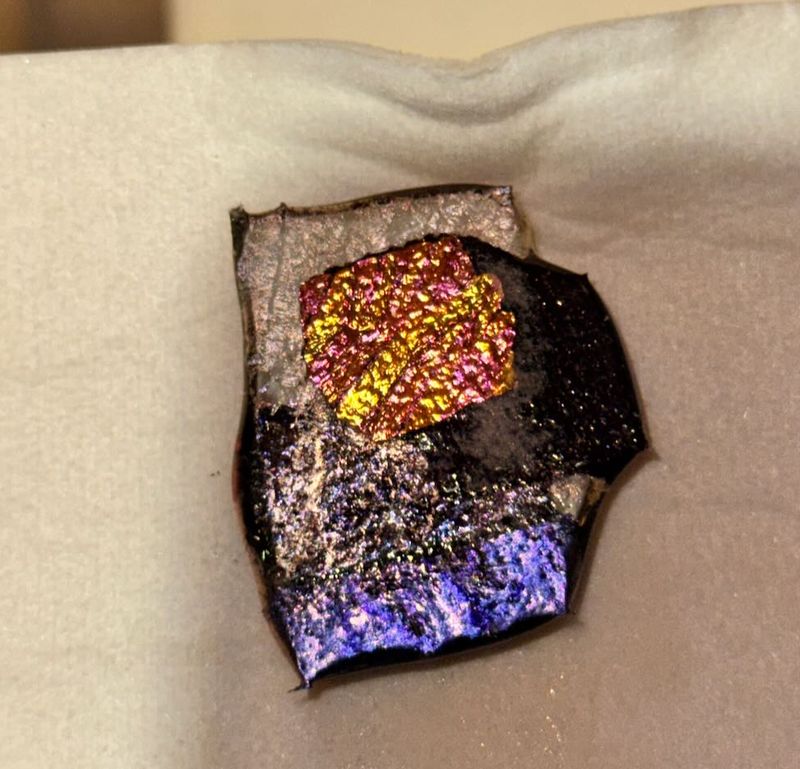
Close-up of dichroic glass shimmering gold, pink and violet on dark glass
Dichroic glass

The shimmer

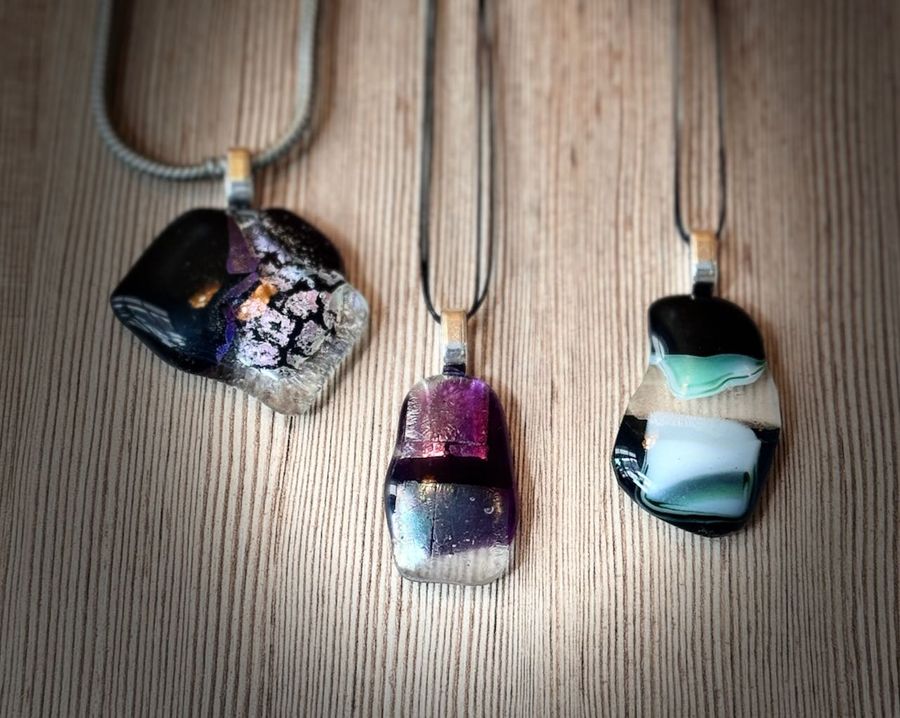
Glass coated in microscopically thin layers of metal oxides, applied in a vacuum chamber. It shows one colour in reflected light and another in transmitted light, so it shifts as you move. It's specialist and expensive, so I use it in small, deliberate accents.

Imported · used sparingly

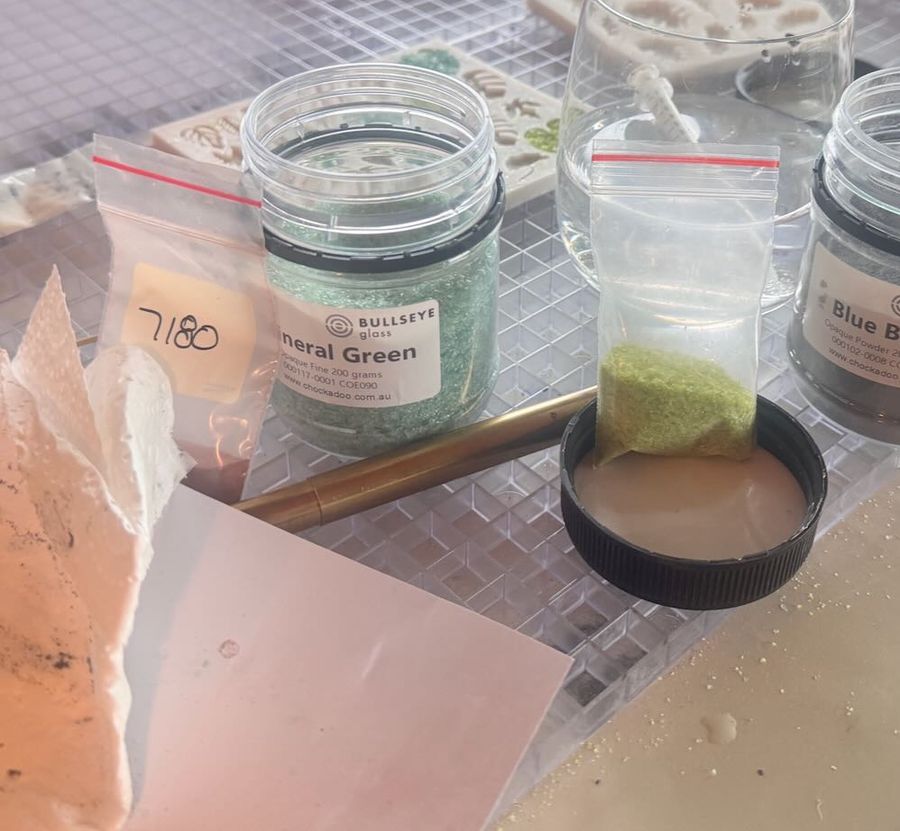
Jars of Bullseye frit labelled Mineral Green and Blue Black on the studio bench, with a bag of fine green frit
Frit

The texture

Fusing glass crushed into grains, from fine powder to coarse chips. Sifted or placed by hand, it fuses into speckles, leaves and soft washes of colour.

Imported · Bullseye Glass, USA
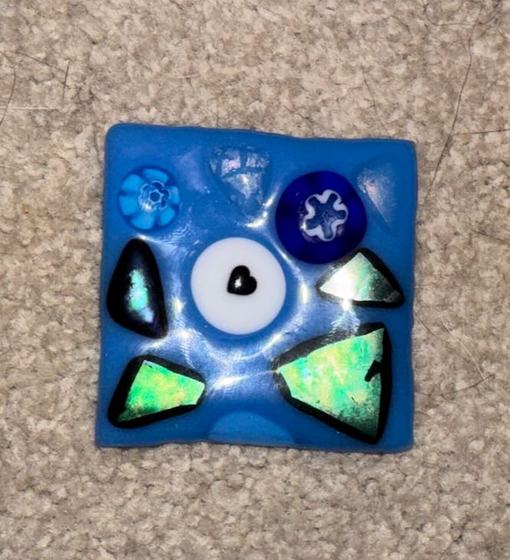
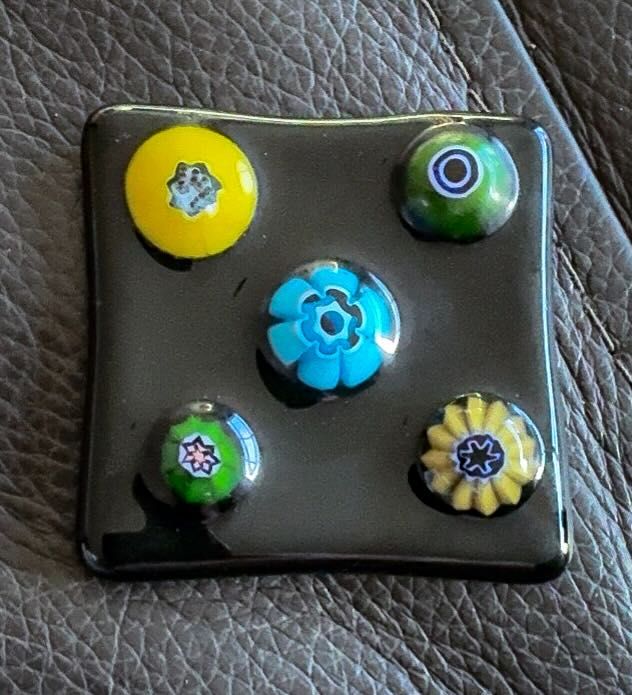
A grey fused dish set with five round millefiori flowers in yellow, blue and green
Millefiori

The flowers

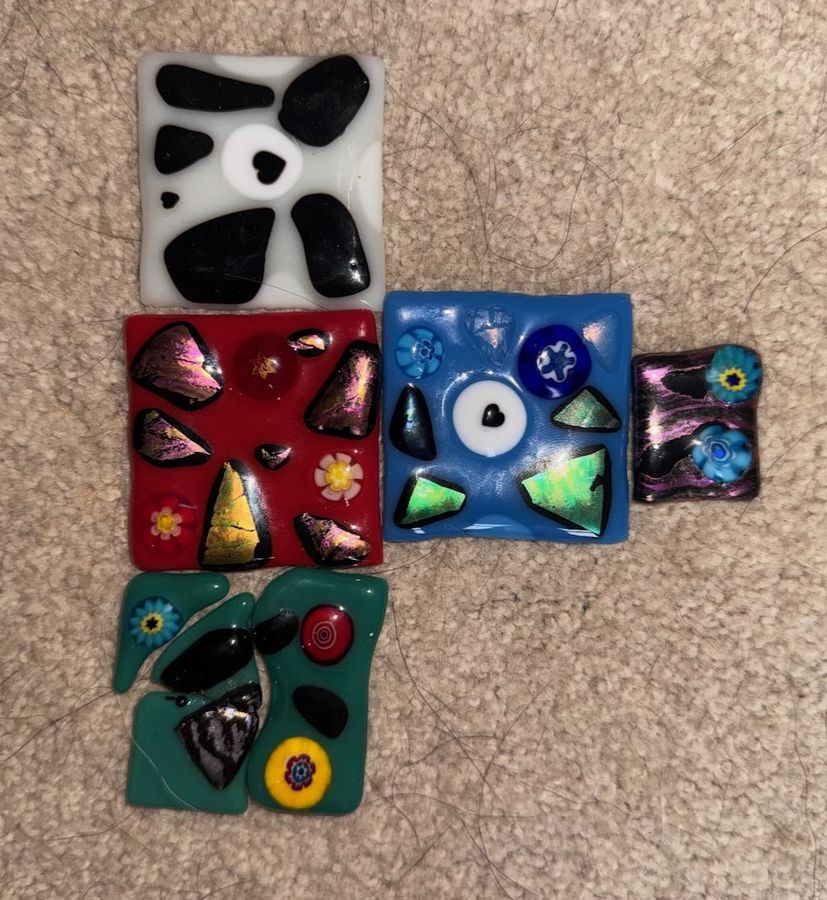
Italian for "a thousand flowers". Rods of patterned glass cane are sliced into thin discs, and the pattern runs right through each one.

Imported · Italy

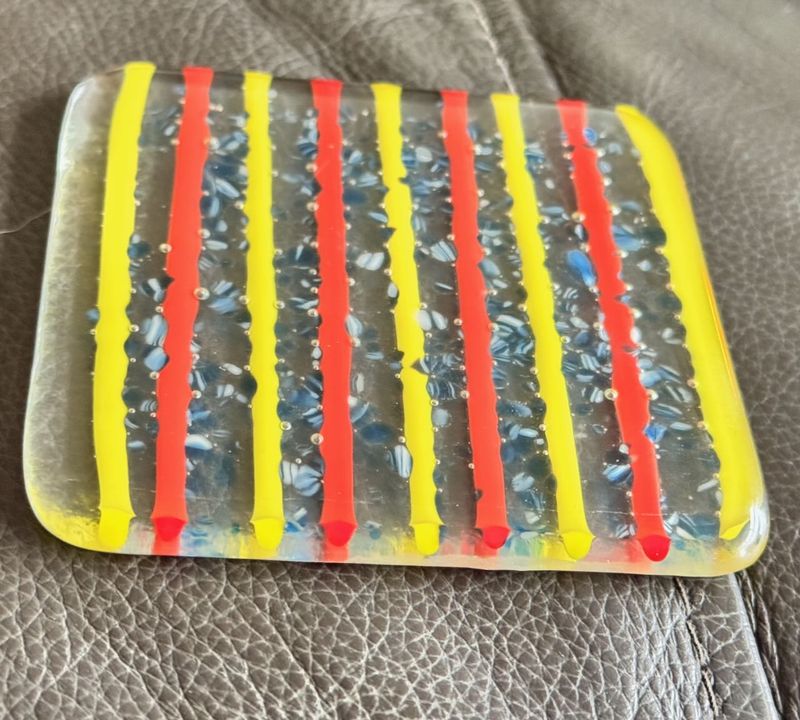
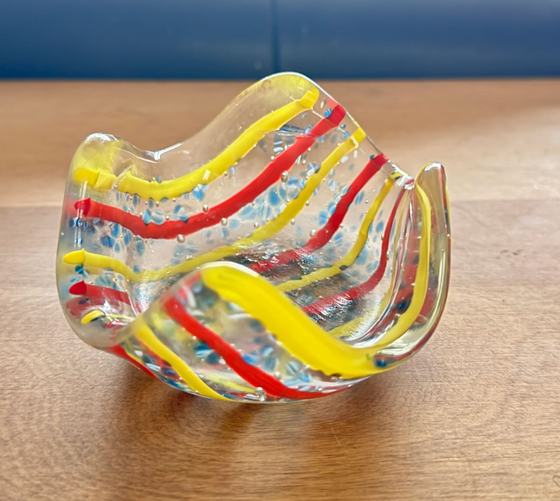
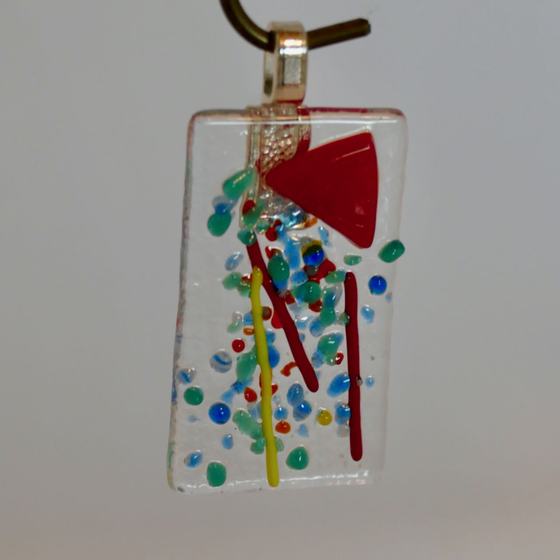
A fused piece with stripes of yellow and red stringer over clear textured glass
Stringer

The lines

Fusing glass pulled into rods thinner than spaghetti. Laid down whole, they fuse into fine lines, like the stripes on this piece and the coloured lines through the curve.

Imported · compatible fusing glass

One of a kind

What goes into every piece

I can use the same glass, the same design and the same kiln schedule twice, and still get two different pieces. That isn't a flaw. It's what makes each one yours alone.

  • Cut and ground by handEvery edge is scored, snapped and ground by hand. No two cuts are identical, so no two layouts are either.
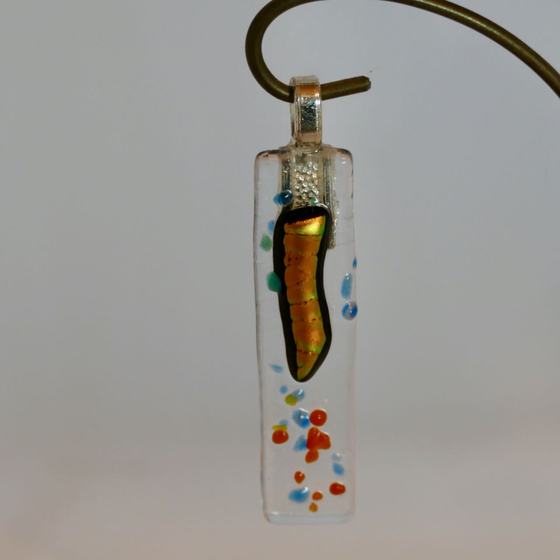
  • Up to five firingsNecklaces take 1–2 firings, candle holders 3, sculptural pieces 4–5. Each firing can take up to 24 hours, and the kiln can't be opened until it has cooled.
  • Glass from across the worldSpecialist fusing glass and frit from the USA, millefiori from Italy, all compatible so the finished piece stays strong.
  • Dichroic is preciousDichroic glass is specialist and expensive. When you see that shimmer in a piece, it was placed there on purpose.
  • The glass movesAt fusing heat, glass flows. I set the starting point. The kiln decides where every colour finally rests.
  • One firing, one resultEach firing produces exactly what's on the shelf that day. I can make something similar, but never the same piece again.
Workshops

Make your own fused glass

The best way to understand this process is to do it. In a small-group session in my Nelson studio you'll cut and design your own pieces. I'll fire them in the kiln, and they'll be ready to collect.

  • Fused glass pendants and small pieces
  • All glass, tools and safety gear provided
  • Small groups, so everyone gets hands-on help
  • No experience needed

First dates coming soon. Get in touch to register your interest and I'll let you know when bookings open. Private group sessions can also be arranged.

Register interest
Contact

Say hello

For commissions, workshop bookings, or to ask about a piece you've seen, email:

Studio in Nelson, New Zealand · visits by appointment